Parent Alert March 2026

Celebrating Social Work
Social work is an integral part of society that often goes unnoticed. According to the National Association of Social Workers (NASW), “Social workers are found in every facet of community life, including schools, hospitals, mental health clinics, senior centers, elected office, private practices, prisons, military, corporations, and in numerous public and private agencies.” March is National Social Work month so now is the perfect time to learn more about this field and celebrate the people doing this important work.
Health Service Alliance broadly defines social services as services that “advance social welfare, social transformation, and social justice.” They go on to state that the goal of social services is to “improve the well-being of people who, in their current circumstances, can’t access everything they need to live a healthy and productive life.” Social services are typically designed to benefit certain groups of people, such as people living in poverty, children, individuals with disabilities, and underserved populations. These services are available at multiple levels to meet as many needs as possible. This includes:
- Government social services: Supplemental Nutrition Assistance Program (SNAP), Medicaid, foster care, programs to prevent and end homelessness, services for veterans and military families, and Social Security.
- Community-based social services: The best example of these services are non-profit organizations like Habitat for Humanity, United Way, Feeding America, Goodwill Industries, and Boys & Girls Clubs of America who are working to give people access to sustainable housing, addressing food insecurities, and giving children safe spaces to learn and grow.
- Local social service organizations: They do the same work as community-based organizations with a focus on addressing the specific needs in their community.
Social services are vital to support those in need, but they would not be available without a dedicated group of people who are passionate about the work they do. Social workers do a wide range of things including assessing needs, developing support plans, coordinating across services, advocating for clients, and monitoring. Their work is based on what field they are in and the needs of the community. Here are some examples:
- Advocacy & Community Organizing: These social workers work toward improving social conditions by addressing systemic injustices rather than just individual needs. Their work includes community organizing, mobilizing resources, and influencing policy through lobbying and activism.
- Child Welfare: These social workers serve vulnerable children, youths, and families. They work to help families provide a safe and nurturing environment. They also work with children who have experienced abuse or neglect.
- Justice and Corrections: These social workers are in courts, rape crisis centers, police departments, and correctional facilities. They support victims through the judicial process and connect them with victim support services, and they also advocate for incarcerated individuals to ensure their needs are being met.
- Mental Health and Substance Use Social Work: These social workers help individuals, families, and communities recover from substance use. They work to establish community support systems, change cultural attitudes, and advocate for policies to help individuals in recovery. They also work directly with those individuals through case management, therapy, and advocacy for jobs and housing needs.
- School Social Work: These social workers support students’ academic and social-emotional success. Their work consists of mental health interventions, crisis management, advocacy, and social-development assessments.
These are just a few examples of the many things social workers do to support their communities and the individuals who need it most. Please reach out to any of the agencies mentioned in this article or in the resources below if you or someone you love need help.
Resources
Health Service Alliance – What Does Social Services Do?
National Association of Social Workers – Social Work Month
National Association of Social Workers – Types of Social Work
Social Work Portal – What are Social Services? Definition, Examples, and How They Support Communities
Catholic Charities: Diocese of Cleveland Wayne County – Homepage
Community Action Wayne/Medina – Homepage
Goodwill Wane and Holmes Counties – Homepage
OneEighty – Homepage
Orrville Area United Way – Homepage
Salvation Army – Homepage
Salvation Army Orrville – Homepage
United Way Wayne and Holmes Counties – Homepage
Wayne County Children Services – Homepage
Wayne County Job and Family Services – Homepage

Alcohol and Vaping: Separating Fact from Fiction
National Drug and Alcohol Facts week is March 15-21. This is an annual event focused on the science of drug use and addiction. One of the goals of this week is to educate people about substances and their effects, especially among youth. There is a lot of misinformation that downplays the risks associated with substance use or encourages use. This is especially true for socially accepted substance use like drinking alcohol and vaping. Here are some common myths about alcohol and vaping, and the science behind why they are false.
Alcohol
Drinking one glass of alcohol a night has no impact on your health: There is always a health risk with drinking alcohol regardless of the amount you consume. Drinking in moderation, defined as two standard drinks a day for men and one a day for women, is typically okay, but that does not mean there is zero risk. A related myth became prevalent a few years ago when a few studies showed a correlation between red wine and fewer deaths from cardiovascular disease. This correlation was blown out of proportion and led to factually inaccurate information becoming popular. The truth is that there is no medical reason to drink alcohol, and research shows that drinking less is better for your health than drinking more.
Alcohol only impacts your liver: This misconception is understandable because the liver is responsible for processing alcohol. However, alcohol can also affect the brain, heart, central nervous system, and the peripheral nervous system. Excessive alcohol use can lead to higher blood pressure, make it harder for the body to resist disease, and increases the risk of heart failure, stroke, various illnesses, and cancers.
A beer is less potent than a cocktail: Alcohol has the same effects regardless of how it is consumed. There is a standard drink size for alcoholic beverages depending on the type of alcohol used. This means that a 12 oz. beer contains the same amount of alcohol as a 1.5 oz. shot.
You’re not in danger of health or addiction problems if you only drink alcohol socially: This is another example of how cultural norms have led to people minimizing the risks associated with drinking alcohol. Drinking has become a normal part of activities like wedding receptions and football games. This social norming is dangerous because it creates an expectation that you need to drink alcohol to have fun, which is not true.
Coffee can sober you up when you’ve had too many: This, and the many similar “get sober quick” and “hangover cures” are all false. Coffee makes people feel more alert because caffeine masks the feeling of being intoxicated, but it does not do anything about your blood alcohol level. The only thing that lowers your blood alcohol level is the time it takes your body to process the alcohol.
Vaping
Vapes are harmless and contain only flavored water: Vapes – even zero-nicotine vapes – are aerosols that contain dangerous chemicals including nicotine, ketamine, formaldehyde, tetrahydrocannabinol (THC), and harmful metals. Vaping reduces tar exposure compared to traditional cigarettes, but that does not make them safe.
E-cigarettes are safer or less addictive compared to tobacco: This misconception is a direct result of marketing from vaping companies. E-cigarettes and traditional tobacco cigarettes are both addictive because they contain nicotine. Nicotine is a highly addictive substance that is associated with harmful effects like respiratory issues, higher risk of heart attacks, and a negative impact on brain development in people under the age of 25.
Vaping can help me quit smoking: Taking the step to quit smoking is great, but switching from tobacco cigarettes to e-cigarettes is neither the most effective nor safest smoking cessation method. E-cigarette brands market themselves as an effective way to quit smoking, but that claim has not been recognized by the FDA. Thankfully there are other clinically proven and healthier smoking cessation methods available if you are trying to quit.
Vaping is better than smoking because it protects my loved ones from secondhand smoke: This is another misconception that is a result of effective marketing. The clear smoke and seemingly pleasant smells from fruit and candy flavored vape juice can appear to be safer than the dark smoke and smell of traditional cigarettes. However, the effects of secondhand e-cigarette vapor are similar to secondhand cigarette smoke including respiratory issues and impaired adolescent brain development.
The myths and misconceptions around alcohol and vaping were created through social acceptance, effective marketing, and general misunderstanding of how our bodies are affected by substances. A great way to combat misinformation is to share the facts, and National Drug & Alcohol Facts Week provides the perfect opportunity to do so.
Check out the resources below to learn more.
Resources
CDC – Alcohol Use and Your Health
CDC – What You Can Do to Lower Risk of Alcohol-Related Harms
CDC – About E-Cigarettes (Vapes)
CDC – Health Effects of Vaping
Cleveland Clinic – 10 Myths About Drinking Alcohol You Should Stop Repeating
Mayo Clinic – Common Myths and Misconceptions About Alcohol Use
Mount Elizabeth – Is Vaping Worse Than Smoking? 7 Myths on Vapes and Kpods Debunked
Tobacco Stops with Me – Vaping Myths Debunked
NIH – National Drug and Alcohol Facts Week
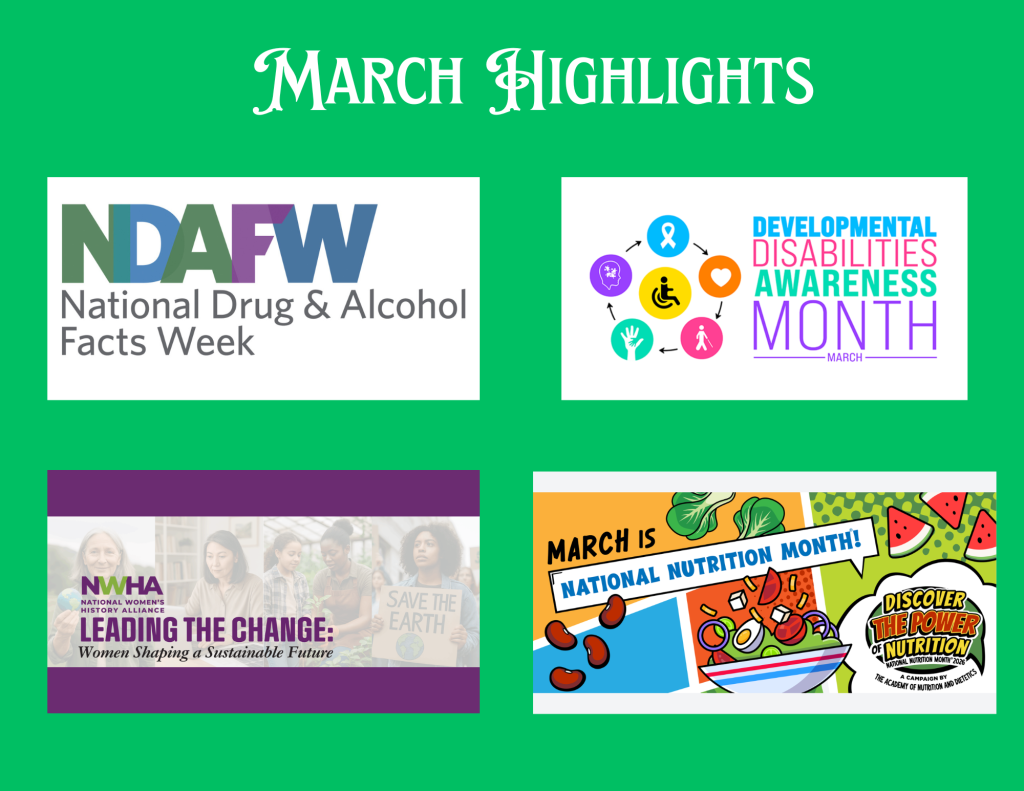
Wayne County Coalitions strives to observe the many different awareness events throughout the year that focus on mental health, substance use prevention, and other important topics. Please click on the links to learn more.
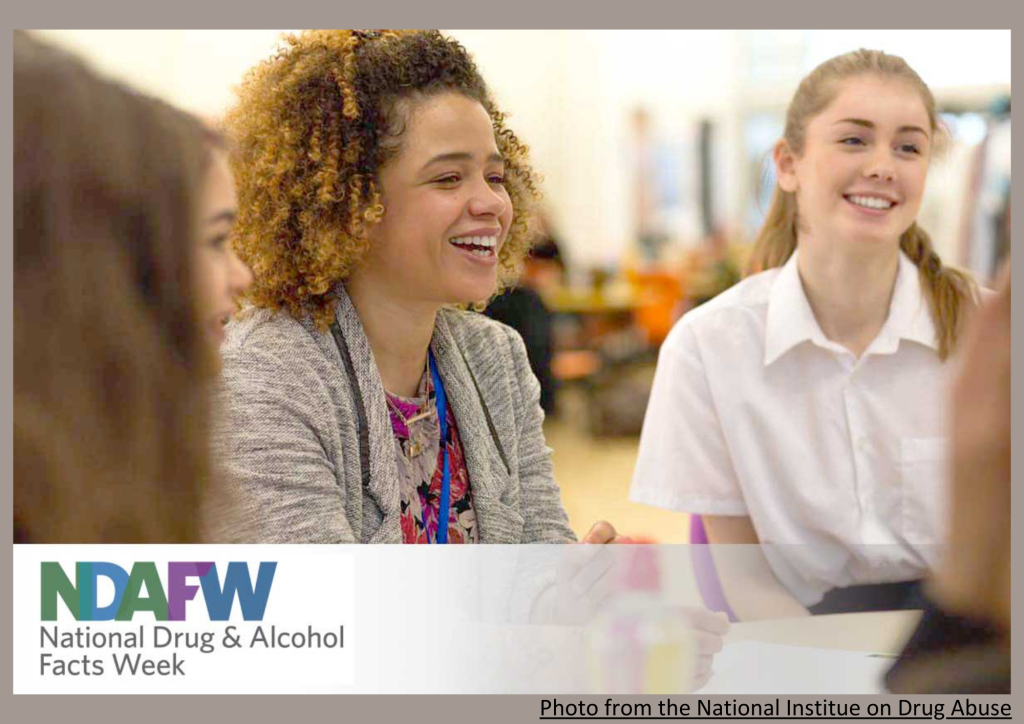
National Drug & Alcohol Facts Week (March 15-21): This week is about shedding light on the truth about drugs and alcohol, especially for teenagers. It also aims to start conversations about and advance the science of drug use and addiction among youth.
NIH – National Drug & Alcohol Facts Week

National Women’s History Month: March is dedicated to celebrating women, honoring their contributions and achievements, and working toward a brighter future. This year’s theme, “Leading the Change: Women Shaping a Sustainable Future”, celebrates the diverse contributions of women who are leading sustainability efforts across environmental, economic, educational, and social justice movements.
National Women’s History Alliance – Homepage
International Women’s Day – International Women’s Day 2026

National Developmental Disabilities Awareness Month: This month brings attention to the unique experiences of individuals with developmental disabilities. It also serves as a time to celebrate their achievements, advocate for their rights, and promote understanding and inclusivity in society.
Awareness Days – Developmental Disabilities Awareness Month 2026
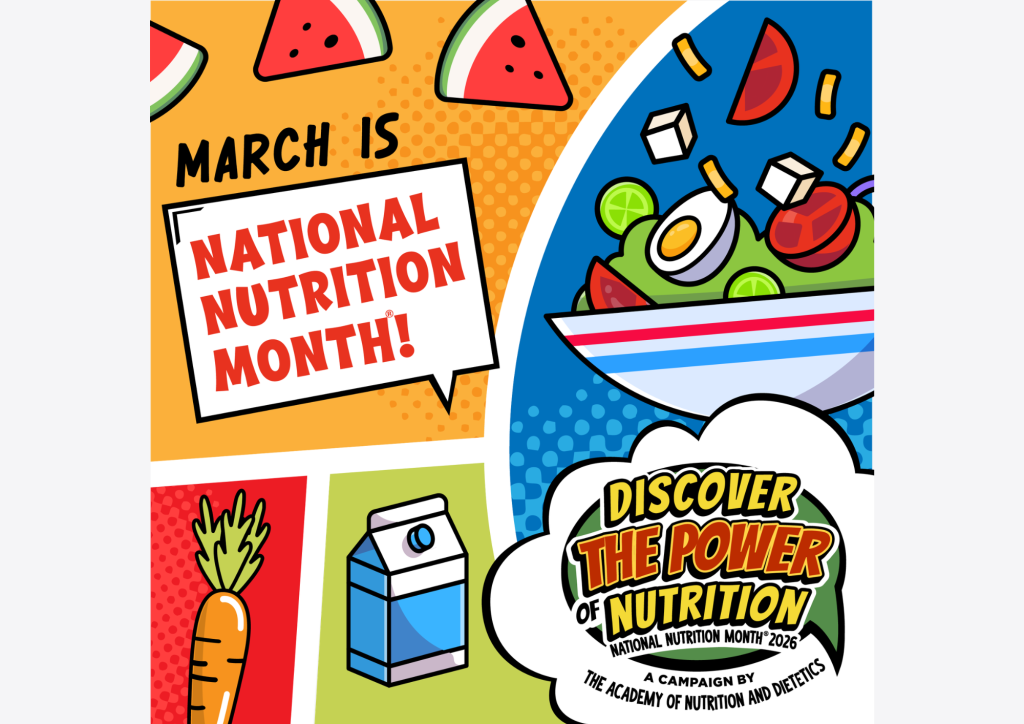
National Nutrition Month: National Nutrition Month is an annual campaign that focuses our attention on the importance of making informed food choices, and developing sound eating and physical activity habits. This year’s theme is “Discover the Power of Nutrition.”
EatRight.org – National Nutrition Month
U.S. Department of Agriculture – Nutrition.gov Homepage


Thank you for being a vital member of our community!
Please click on the link below to send this Parent Alert to a family member or friend. They will also have the opportunity to sign up to receive monthly Parent Alerts.
 |  |  |
Copyright © 2026 Turning Point Coalition. All rights reserved.
Our mailing address is:
Turning Point Coalition
c/o 104 Spink St.
Wooster, OH 44691
CoalitionsCommunication@gmail.com